
Insourced imaging services maximise an NHS Trust’s existing scanners by providing flexible staffing to extend operating hours. Outsourced imaging services expand physical capacity through external resources, such as mobile or modular MRI and CT scanners. Both approaches help NHS Trusts increase diagnostic capacity, reduce waiting lists, and improve patient pathways.
Diagnostic imaging services across the UK are operating under unprecedented strain. Rising clinical demand, severe workforce shortages, and the ongoing backlog of elective care have created a perfect storm for radiology departments. NHS Trusts are continually tasked with finding practical, cost-effective ways to scan more patients without compromising the quality of care.
To meet these targets, clinical leads and procurement teams must evaluate the best ways to scale their operations. Two primary strategies have emerged to relieve the pressure: insourcing and outsourcing. Understanding the structural and financial differences between these models is essential for making informed decisions about capacity planning.
Radiology Management Solutions (RMS) was set up with one simple purpose: to help the NHS. We help NHS Trusts increase diagnostic capacity, reduce waiting lists and improve patient pathways through flexible staffing, scanning hardware and fully managed radiology solutions. This guide examines the critical differences between insourced and outsourced imaging services, helping your Trust choose the right path forward.
NHS radiology departments face complex, interconnected operational pressures. Addressing these hurdles requires a clear understanding of the specific deficits slowing down patient pathways.
Clinical reliance on diagnostic imaging has surged over the past decade. According to recent data, demand for MRI and CT scans has increased by 185% and 250%, respectively [The King’s Fund, 2024]. This sharp rise reflects the critical role these modalities play in early disease detection and complex treatment planning.
Equipment cannot function without highly trained personnel. The NHS currently faces acute workforce shortages across radiography departments, with the average vacancy rate standing at 13.4% [The Society of Radiographers, 2024]. Overstretched clinical teams are working under immense pressure, leading to burnout and making staff retention increasingly difficult.
National targets dictate that 99% of patients should wait less than six weeks for a diagnostic test. However, in March 2024, only 78% of patients received a test within this timeframe [The King’s Fund, 2024]. At the same time, over a million patients remain on waiting lists to see a diagnostic radiographer [The Society of Radiographers, 2024].
Despite the high demand and long waiting lists, physical scanning infrastructure is frequently under-utilised. The UK only operates 17 MRI/CT scanners per million people, compared to the European average of 28 to 35 [The King’s Fund, 2024]. When hospitals lack the staff to run their limited equipment during evenings and weekends, valuable diagnostic capacity is lost.
Insourced imaging involves bringing an external team of clinical professionals into an NHS hospital to operate the Trust’s own diagnostic equipment. Choose insourced imaging if your Trust has sufficient scanning hardware but lacks the personnel to run it at maximum capacity.
RMS helps NHS Trusts unlock under-utilised capacity by staffing existing MRI, CT, and ultrasound scanners for extended hours. We provide highly experienced radiographers and clinical support workers (CSWs) to keep departments running up to 18 hours a day, including weekends.
Our staffing approach delivers several key benefits for NHS Trusts:
Outsourced imaging services provide NHS Trusts with external infrastructure and fully managed support to increase overall scanning capacity. Choose outsourced imaging if your hospital’s physical space and internal hardware are already operating at absolute maximum capacity and you require additional physical resources.
RMS delivers comprehensive outsourced solutions tailored to the unique clinical requirements of NHS Trusts.
When internal scanners cannot meet clinical demand, RMS supplies state-of-the-art mobile and modular scanning units. These solutions offer quick installation and deployment, often requiring only a suitable outdoor space or parking area. Modular buildings provide a highly cost-effective alternative to the capital outlay required for permanent hospital extensions. We supply the latest wide-bore scanners through a vendor-neutral approach, ensuring patient comfort and clinical accuracy. These fully managed solutions include the unit, the equipment, application training, and the clinical staff required to operate them safely.
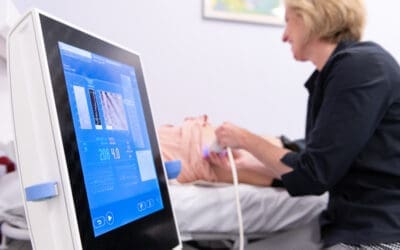
Complex ultrasound requirements often create bottlenecks in patient pathways. RMS provides highly technical ultrasound imaging, including musculoskeletal (MSK), vascular, and fertility scans. We employ over 50 UK-trained sonographers who hold master’s level qualifications from CASE-accredited universities. Our team performs over 20,000 scans annually, helping to clear waiting lists for complex diagnostics that require specialised expertise.
To support NHS England’s vision of delivering diagnostic care closer to home, RMS helps manage and staff Community Diagnostic Centres. These hubs divert planned elective diagnostic activity away from acute hospital sites. By partnering with modular and mobile unit suppliers, RMS delivers flexible, fully managed CDC solutions that relieve pressure on overstretched hospital staff and offer patients a faster, more convenient diagnostic experience.
Selecting the right partner is vital for maintaining high clinical standards and ensuring taxpayer money is spent effectively. RMS operates with the confidence of an experienced delivery partner that understands frontline radiology pressures. We have a proven track record, with over 1,000,000 patients scanned annually across the UK.
Beyond providing exceptional radiographers and scanning hardware, RMS offers distinct operational advantages:
The pressures facing NHS diagnostic imaging departments will not disappear overnight. However, by establishing strategic partnerships, Trusts can implement practical solutions that yield immediate results.
RMS remains committed to its core mission: to help the NHS. By providing flexible staffing, modular capacity, and fully managed radiology solutions, we empower NHS decision-makers to make informed, efficient choices. We understand the pressure, and we provide practical ways to help you maximise your resources, support your staff, and deliver exceptional patient care.
Insourcing uses external clinical staff to operate a hospital’s existing diagnostic equipment, usually during extended hours. Outsourcing provides both the external staff and the physical hardware, such as a modular MRI unit, to add entirely new capacity to the hospital site.
Because modular units only require a suitable outdoor space or parking area, they can be installed and fully operational in a matter of weeks. This offers a significantly faster route to capacity expansion compared to permanent hospital builds.
While RMS can provide cover at short notice, we are not a traditional locum agency. Our flexible staffing solutions are best suited for interim or long-term contracts designed to systematically clear waiting lists and manage ongoing clinical backlogs safely.
RMS only deploys UK-trained sonographers who hold master’s level qualifications from CASE-accredited universities. Our specialists have extensive experience in highly technical areas, including MSK, vascular, and fertility scanning.