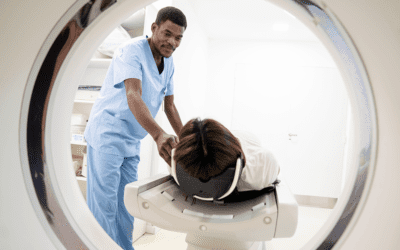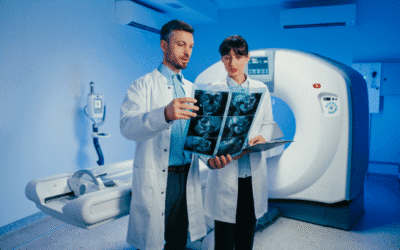


Diagnostic imaging is crucial for accelerating NHS cancer pathways. Advanced modalities like MRI and CT enable early tumour detection and accurate staging. By increasing diagnostic capacity through flexible staffing, extended hours, and modular scanning hardware, Radiology Management Solutions (RMS) helps NHS Trusts reduce waiting lists and improve patient outcomes without overstretching existing resources.
Diagnostic imaging plays a foundational role in modern healthcare, particularly when diagnosing and managing complex oncology cases. As cancer rates continue to rise across the UK, the pressure on radiology departments to deliver rapid, accurate diagnoses has never been greater. Over the last decade, demand for MRI and CT scans has increased by 185% and 250% respectively [Source: The King’s Fund, 2024]. This surge in demand creates severe bottlenecks, leaving many NHS Trusts struggling to meet their diagnostic targets.
Advanced diagnostic imaging streamlines cancer pathways by providing clinical teams with the precise information required to make rapid treatment decisions. When hospitals possess the right scanning capacity and staffing levels, patient pathways move faster. Radiology Management Solutions (RMS) helps NHS Trusts increase diagnostic capacity, reduce waiting lists, and improve patient pathways through flexible staffing, scanning hardware, and fully managed radiology solutions.
The success rate of oncology treatment relies heavily on the speed of diagnosis. Early cancer detection allows clinical teams to intervene before a tumour progresses or metastasises, significantly improving survival rates and expanding the range of viable treatment options available to the patient.
Delays in diagnostic imaging have a direct impact on patient prognosis and mental well-being. Waiting for scan results causes immense anxiety for patients and their families. Furthermore, prolonged waiting times can lead to disease progression, moving a patient from a curative pathway to a palliative one. In January 2024, nearly one in five patients waited more than six weeks for an MRI or CT scan [Source: The Royal College of Radiologists, 2024]. Reducing these waiting times is a clinical necessity that directly influences long-term patient outcomes.
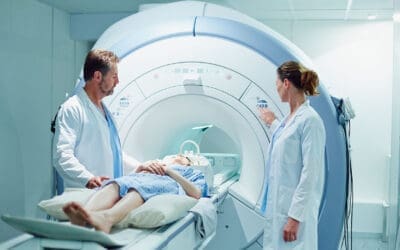
Different types of cancer require specific imaging techniques for accurate detection and staging. Clinical teams rely on a combination of advanced diagnostic tools to build a comprehensive view of a patient’s condition.
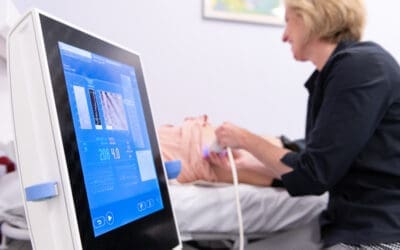
RMS provides fully managed solutions across all these modalities. RMS supports NHS radiology departments by supplying mobile and modular MRI and CT units, alongside specialist ultrasound scanning services. With a team of highly experienced sonographers performing over 20,000 scans annually, RMS ensures that NHS Trusts can maximise their existing ultrasound capacity to keep pathways moving.
Faster access to diagnostic imaging directly correlates with faster cancer pathways. The NHS “faster diagnosis standard” aims to ensure patients receive a definitive diagnosis or an all-clear within 28 days of an urgent referral. Efficient diagnostic services are the engine that drives this standard.
When NHS Trusts increase their scanning capacity, they clear the backlog of urgent referrals faster. RMS helps NHS Trusts achieve these targets by unlocking under-utilised capacity. RMS teams operate existing in-house scanners for extended hours – up to 18 hours a day – and throughout the weekend. By deploying highly experienced radiographers and clinical support workers during these extended shifts, RMS ensures scanners run at maximum productivity. This practical, solutions-led approach means more patients are scanned promptly, reducing the time between referral and diagnosis.
Quicker diagnosis leads to earlier treatment initiation, which fundamentally improves patient survival rates and reduces the psychological burden of waiting. A streamlined diagnostic process provides patients with clarity and a clear treatment plan sooner.
For the NHS, efficient cancer diagnostics generate substantial operational benefits. Rapid imaging reduces bed blocking, as inpatients awaiting scans can be diagnosed and discharged or moved to the correct ward more quickly. It also allows NHS Trusts to allocate their resources more effectively, preventing the costly knock-on effects of delayed treatments.
RMS partners with NHS Trusts to achieve these efficiency gains. By offering fully managed radiology solutions, RMS helped save the NHS over £3.3 million last year alone [Source: RMS Internal Data, 2024]. This approach relieves pressure on overstretched NHS staff, improves patient flow, and delivers measurable cost-efficiency improvements.
Radiology departments currently face significant operational hurdles. The UK experiences acute workforce deficits, with an estimated 3,500 additional radiographers needed in England by 2025 to meet demand [Source: The Society of Radiographers, 2024]. Furthermore, the UK operates with only 17 MRI and CT scanners per million people, compared to a European average of 28 to 35 scanners per million [Source: The King’s Fund, 2024].
RMS offers practical delivery expertise to overcome these hardware and staffing shortages. RMS supplies a network of more than 400 radiographers and clinical support workers, helping Trusts fill rota gaps and extend operating hours.
To address hardware deficits, RMS provides uniquely tailored scanning hardware solutions. Choose modular MRI and CT units if your NHS Trust requires immediate, long-term scanning capacity without the extensive capital expenditure and disruption of a permanent hospital build. Modular units can be installed quickly in hospital car parks and can be customised with waiting rooms and reporting areas.
The future of diagnostic imaging will be heavily influenced by the integration of Artificial Intelligence (AI) and advanced software algorithms. AI tools are increasingly being developed to assist radiologists in identifying subtle abnormalities on CT and MRI scans that human eyes might miss.
These emerging technologies will serve as a “second read” for clinical teams, speeding up the reporting process and reducing the administrative burden on diagnostic departments. By combining AI innovation with robust hardware and flexible staffing, NHS Trusts will be better equipped to accelerate cancer pathways even as patient demand grows.
Efficient diagnostic imaging remains the most critical component of a faster cancer pathway. When NHS Trusts have the capacity to scan and report on patients quickly, the entire healthcare system benefits from earlier interventions, better resource utilisation, and fundamentally improved patient outcomes.
RMS speaks with the confidence of an experienced delivery partner that understands radiology pressures first-hand. With over 1,000,000 patients scanned annually by RMS professionals, the organisation remains fully committed to helping the NHS navigate its diagnostic challenges. By providing flexible staffing, modular scanning hardware, and fully managed services, RMS will continue to support NHS Trusts in reducing waiting lists and delivering exceptional patient care.
A modular MRI or CT unit can be installed and fully operational in a matter of weeks. The installation requires only a suitable outdoor space, such as a hospital car park, making it a fast and practical solution for Trusts needing immediate diagnostic capacity.
A mobile scanner is housed within a trailer and is ideal for short-term rental to cover sudden capacity drops or equipment breakdowns. A modular imaging unit is a standalone, customisable building (often including waiting and reporting areas) designed for longer-term capacity expansion without the capital outlay of a permanent brick-and-mortar build.
RMS provides a network of over 400 highly trained radiographers, sonographers, and clinical support workers. These professionals can integrate into existing NHS teams or manage full out-of-hours shifts, allowing departments to run scanners up to 18 hours a day, including weekends, without overworking in-house staff.
NHS radiology departments facing high demand, large diagnostic waiting lists, and severe workforce shortages benefit most from fully managed solutions. These services are particularly useful for Trusts setting up Community Diagnostic Centres (CDCs) that require both the physical hardware and the clinical staff to operate them effectively.