
Insourcing mobilisation is everything between agreeing a contract and scanning the first patient: the service specification, the team, governance, systems and, for a mobile or modular unit, the site. How long it takes depends on the scope, the site and how the service is bought.
It’s for Heads of Radiology, imaging managers and procurement leads in NHS Trusts who need additional capacity for waiting lists without adding to their team’s workload.
There are three common ways to increase capacity, and each needs mobilising:
Whichever insourcing model you choose, it has to fit alongside existing services and NHS teams.
These are the key areas RMS asks NHS Trusts to agree first:
Agreeing these operational requirements early speeds up decision making and gives a clear basis for cost.
It depends on what is being set up and how it is bought, so the process starts with providers and the Trust agreeing the scope. Where an NHS framework is in place, Trusts can often call off a service without a full tender, which lets services mobilise sooner.
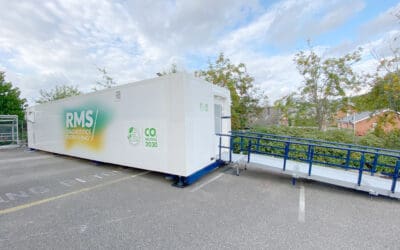
A mobile or modular unit can typically be deployed and operational within a matter of weeks, depending on site readiness, power availability and the procurement framework used. For staff on your existing scanners, start dates are agreed once the scope is clear. When RMS took on CT scanning for a Birmingham NHS Trust in 2025, the contract began immediately, with scanning six days a week to help reduce radiology waiting lists.
A robust mobilisation works through these steps in order, with the mobilisation team and your clinical lead meeting regularly until the service is running. It prepares both teams for effective service delivery, with clear communication and clinical lead engagement throughout, and avoids the delays and operational risks of a rushed transition, protecting service quality and operational resilience.
Turn the answers above into a written specification and contract, including reporting and the performance measures you will use. A robust assessment at this stage saves changes later in the process.
Put together an experienced team with the right expertise for your equipment and patients. Every member of RMS’s team is fully qualified and accredited.
Before the first patient, governance should be agreed with your clinical lead: clinical leadership, clear lines of accountability, regular governance meetings and escalation pathways. RMS works to CQC requirements, national clinical guidelines, best practice and your Trust’s policies, and staff report incidents and near misses. That builds patient safety, risk management and good clinical practice in from the start. Read more in Inside the RMS Clinical Governance Framework.
Plan from the outset how staff and systems will work with yours, so referrals, images and reports stay in one place and nothing is duplicated. Data protection and GDPR requirements are agreed at this stage of the process.
For a mobile or modular unit, a site survey and assessment comes first, so potential risks such as inadequate power or poor patient routes are dealt with before the unit arrives. A modular unit needs outdoor space or a parking area rather than a building.
Once sessions begin, track performance against the agreed measures. Internal audits, feedback from patients and clients, and assessment of quality metrics feed into action plans aimed at enhancing patient care and successful delivery.
Insourcing adds flexibility, but it can strain your own team if the Trust side isn’t planned. Clear responsibility avoids gaps in delivery. In a typical insourced service, it splits like this:
| The Trust | RMS |
| Confirms the scope, volumes and hours | Provides qualified radiographers and clinical support workers |
| Gives access to scanners, systems and the site | Plans how its team works within your systems and processes |
| Decides who reports and who books patients | Runs clinical governance and leadership for its team |
| Names a clinical lead and a day-to-day contact | Tracks the services delivered against the agreed measures |
The Trust keeps control of the pathway; RMS is there to deliver the agreed sessions and support your team.
RMS is not a locum agency. We work on interim and long-term contracts, with service delivery by radiographers and clinical support workers on Trusts’ existing Siemens, GE and Philips scanners or in mobile and modular units, operating up to 18 hours a day. Contracts range from short-term support to multi-year, fully managed work, and RMS is an approved supplier on the NHS Workforce Alliance framework for insourced services.
By 2022, RMS had staffed a modular MRI unit in North Wales for four years, scanning over 8,000 patients; other case studies cover Lincolnshire, Birmingham, the North West and Yorkshire. We’re typically contracted by NHS Heads of Procurement and Heads of Radiology who need additional clinical capacity to achieve elective recovery goals for patients. See how our staffing solutions work, or compare models in our insourced vs outsourced imaging guide.
It depends on scope, site and buying route. A mobile or modular unit can typically be running within weeks, depending on site readiness and power. Start dates for staff on your own scanners are agreed once the scope is clear.
Often not. Where an NHS framework is in place, Trusts can call off the service without a full tender. RMS can be procured through multiple frameworks via our partner network, or by direct award: see our procurement page.
RMS runs clinical governance for its own team, covering safety and quality, aligned with your Trust’s policies, CQC requirements and national clinical guidelines. The details are agreed with your clinical lead before the first patient.
RMS has offered its NHS customers a seven-day on-call service to cover unexpected gaps in the rota, so patients’ scans aren’t cancelled. Mobilisation is the time to address how cover will work.
Tell us the modality, volumes and hours you need. For further information, contact us, call 0161 410 0169 or email hello@rms-scanning.co.uk.